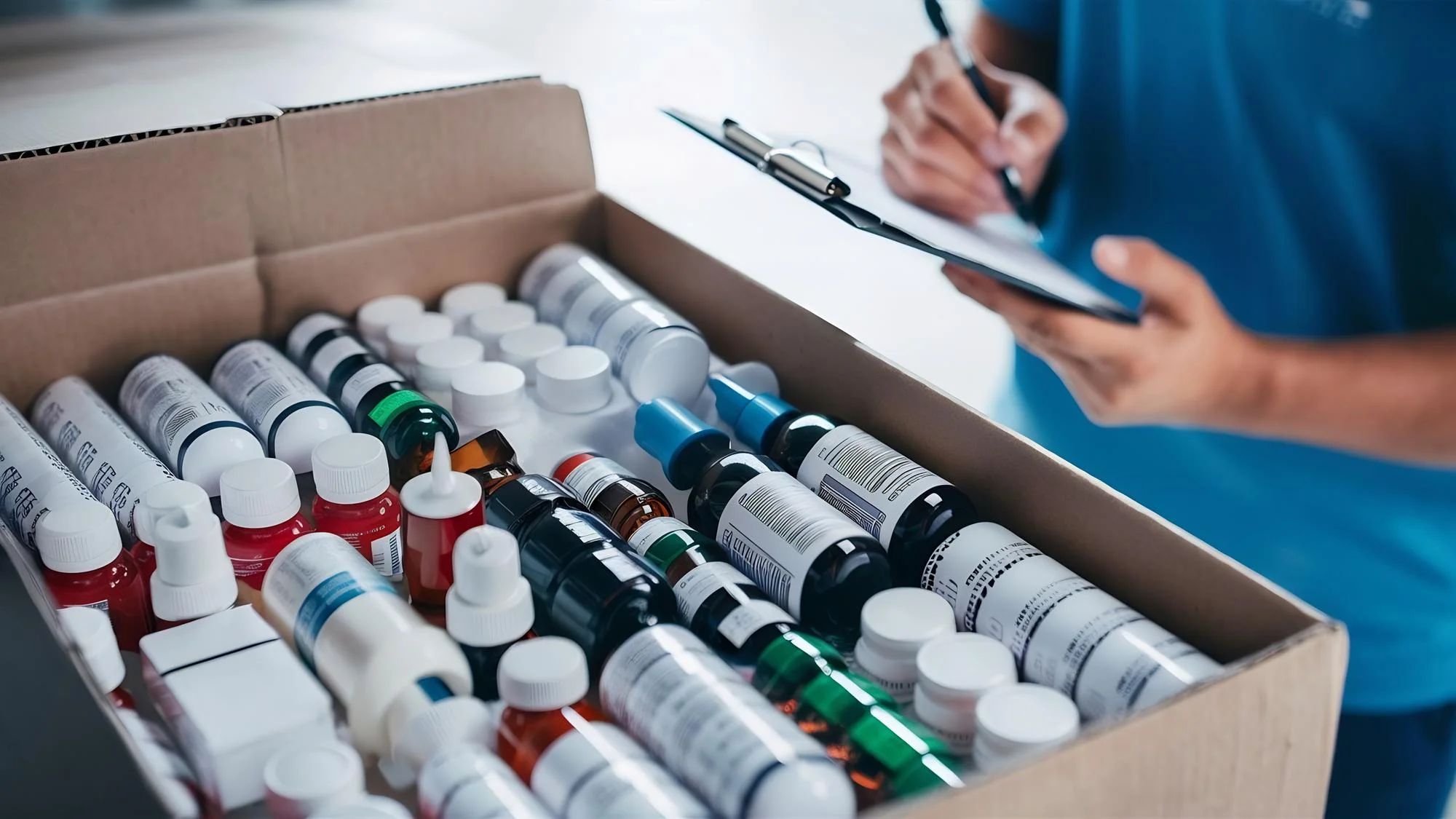


The first California pharmacy-error report is more useful to patients when it is translated into a simple habit: do not leave a pickup counter, delivery bag, or caregiver handoff unchecked. A short comparison between the label and what you expected can catch a mismatch before the medication becomes part of the home routine.
Quick Answer
California’s first statewide CAMER report, prepared in January 2026, analyzed 9,653 medication-error reports from the program’s initial reporting period. Wrong-patient errors were the largest category at 2,357 reports, followed by wrong quantity at 2,148, wrong directions at 1,519, wrong drug at 1,498, and wrong strength at 788. The report also found that the most frequently described wrong-patient scenario involved the wrong patient’s prescription bag being handed to a customer. For patients, the useful takeaway is not to memorize the reporting system. It is to check five things before using a prescription: the patient name, medication, strength, directions, and quantity. If any of those do not match, contact the dispensing pharmacy before taking or administering the medication.
What California’s First Pharmacy Error Data Shows Patients
The first California Medication Error Reporting report provides a statewide view of errors submitted by covered outpatient pharmacies during the program’s first reporting period. It is not a ranking of individual pharmacies, and it should not be read as a complete count of every dispensing mistake in the state.
What the report does provide is a pattern. The five largest reported categories all involve details a patient or caregiver can often compare at pickup or delivery.
- Wrong patient
- 2,357 submitted reports involved a prescription connected to the wrong patient.
- Wrong directions
- 1,519 reports involved directions that did not match the authorized prescription.
- Wrong quantity
- 2,148 reports involved the amount dispensed.
- Wrong drug or strength
- 1,498 wrong-drug reports and 788 wrong-strength reports were submitted.
Data Is a Safety Signal, Not a Pharmacy Scorecard
CAMER reports are designed to identify error patterns and contributing factors. The statewide totals do not tell a patient that one specific pharmacy is safer or less safe than another.
Why the Pickup Counter Is a Key Safety Checkpoint
Wrong-patient events deserve special attention because they were the largest reported category. In the first CAMER report, the most frequently selected subtype was a customer receiving another patient’s prescription bag.
Among reported wrong-patient events, 60% were identified as occurring at the point-of-sale or delivery stage. The report also describes patient-identification problems when two identifiers, such as full name and date of birth, are not consistently used.
What are you checking?
Patient name
Check the full patient name on the bag and the prescription label before leaving the counter or opening a delivered package. Caregivers should verify the patient they are picking up for as well.
Drug & strength
Compare the medication name and labeled strength with the current prescription. If the product looks unfamiliar, ask the pharmacy to confirm it before use.
Directions
Read the current label instead of relying on memory or an older bottle. If the directions conflict with what the prescriber told you, contact the pharmacy before changing how the medication is used.
Quantity
Check whether the dispensed amount makes sense for the prescription. If the quantity appears short, excessive, or different from what was expected, ask the pharmacy to review the fill.
Preparation
For compounded prescriptions, verify the preparation, concentration or strength, dosage form, route, storage instructions, and beyond-use date before use.
Caregiver Pickup Deserves the Same Verification
A spouse, adult child, friend, or caregiver should know the correct patient name and other identifying information before collecting prescriptions for someone else.
Five Prescription Checks Worth Doing Every Time
These checks are intentionally simple. They are not a substitute for pharmacy verification, but they create one more opportunity to catch a mismatch before the prescription is used.
01. Is the full patient name correct on both the bag and the prescription label?
02. Is this the medication or compounded preparation I expected to receive?
03. Does the labeled strength match the current prescription?
04. Do the directions match what the prescriber and pharmacist told me?
05. Does the quantity or amount dispensed make sense for this fill?
06. If the appearance changed, can the pharmacy explain the reason before I use it?
A different manufacturer, container, color, or compounded-preparation appearance can have a legitimate explanation. The safety step is to ask, not to assume that every visual difference is an error.
What the Report Suggests About Pharmacy Workflow
The CAMER report shows that reported errors can begin at more than one point in the dispensing process. Data entry, order entry, transcribing, prescription filling, production, bagging, and point-of-sale or delivery can all matter depending on the type of event.
For wrong-patient errors specifically, the report found that point-of-sale or delivery was the most frequently reported stage. Other reported stages included data entry, bagging, and prescription filling or production.
- Patient selection
- An incorrect patient profile can create problems before the medication is filled.
- Pickup or deliveryCurrent directions
- The wrong completed bag can be handed to the patient or caregiver.
- Bagging
- A correctly filled prescription can still be placed into the wrong patient’s bag.
- Patient verification
- A final name, medication, strength, directions and quantity check adds another chance to notice a mismatch.
The Patient Check Is an Extra Layer, Not a Transfer of Responsibility
Pharmacies remain responsible for accurate dispensing and required quality systems. Patient verification simply adds another practical opportunity to catch a problem.
What to Do When a Prescription Does Not Match
If the patient name, medication, strength, directions, quantity, dosage form, or another important detail appears wrong, contact the dispensing pharmacy promptly. Keep the original container, bag, label, and medication available so the pharmacy can review what was dispensed.
- Before use
- Set the prescription aside and call the dispensing pharmacy when a material detail does not match.
- After use
- If a possibly incorrect medication was already taken, contact the pharmacy and an appropriate clinician promptly for case-specific guidance.
- Board complaint
- California accepts complaints about prescription errors whether or not the patient was harmed
- Keep evidence
- The Board advises keeping the prescription container and contents for reference when possible.
Do Not “Correct” the Prescription Yourself
Do not change the dose, relabel a container, combine medications, or substitute another prescription while trying to solve a suspected dispensing error.
Delivered and Compounded Prescriptions Need the Same Verification
Home delivery removes the pickup-counter moment, so the verification step moves to the package opening. Compare the patient name and label before the prescription is put into a cabinet, refrigerator, medication organizer, or caregiver supply area.
For a compounded prescription, also check the preparation name, strength or concentration, dosage form, route, storage instructions, and beyond-use date. A compound can look different from a previous fill for a legitimate reason, but the pharmacy should be able to explain the change.
01. Match the patient name on the outer package, bag, and prescription label.
02. Review the labeled strength, dosage form, quantity, and directions.
03. Review the beyond-use or expiration information before placing it with older medication.
04. Confirm the medication or compounded preparation before storing it.
05. Check storage instructions before refrigerating, freezing, or leaving a preparation at room temperature.
06. Call the dispensing pharmacy when the new fill does not match the expected prescription details.
A Five-Second Label Check Can Answer the First Question
Fireside Pharmacy can review patient-name, medication, strength, directions, quantity, compounded-preparation, pickup, and delivery questions.
Frequently Asked Questions
What were the most common pharmacy errors in California’s first 2026 report?
The largest reported categories were wrong patient, wrong quantity, wrong directions, wrong drug, and wrong strength.
Why should I check the patient name at prescription pickup?
Wrong-patient errors were the most frequently reported category, and the first CAMER report identified the wrong patient’s prescription bag being given to a customer as the most frequently reported wrong-patient subtype.
Does a different-looking pill or compounded medication mean the pharmacy made an error?
No. Manufacturer, packaging, formulation appearance, or other legitimate changes can make a refill look different. Ask the pharmacy to confirm the medication and explain the difference before assuming there is an error.
What should I keep if I believe the pharmacy dispensed the wrong prescription?
Keep the original prescription container, label, bag, and contents when possible. These details can help the dispensing pharmacy or the California State Board of Pharmacy review the concern.
Can I complain to the California Board of Pharmacy even if no one was harmed?
Yes. The Board states that complaints about prescription errors should be reported regardless of whether the patient was harmed.
Check the Prescription Before It Becomes Part of the Routine
Use the form above to request a call about the patient name, medication, strength, directions, quantity, compounded preparation, pickup, or delivery.