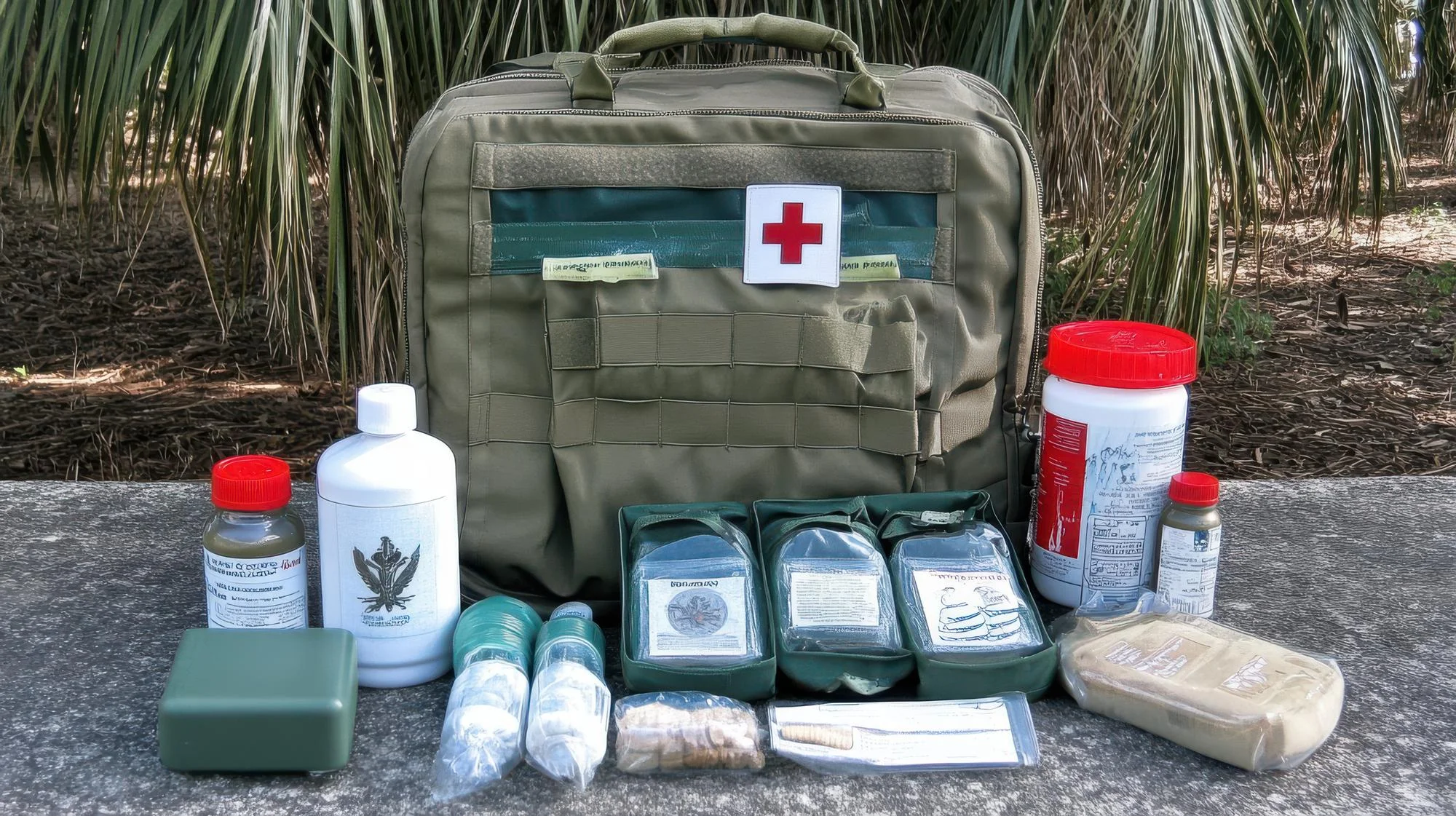


Wildfire medication planning often fails in a simple way: the bag contains one set of prescriptions while the written list shows another. A medication was changed last month, a new strength was added, a refill bottle is nearly empty, or the caregiver has an old printout. The practical July check is to make the supply and the record agree before evacuation conditions become urgent.
Quick Answer
The California State Board of Pharmacy advises keeping at least one week of prescription medications in a waterproof patient-care kit and periodically using and replenishing that supply so it remains current and unexpired. The same kit should include a complete medication list with drug names, dosages, allergies, nonprescription medicines and supplements, plus medical contacts, prescription copies, insurance information, and specialized health items. Treat the seven-day supply and the list as one system: every medication in the bag should appear on the current list, and every medication on the list should have an accurate supply status. Count actual usable doses rather than simply counting bottles. If a medication needs refrigeration, injections, a device, oxygen, batteries, or other administration supplies, keep those requirements linked to the same line on the list. CAL FIRE distinguishes an evacuation warning from an evacuation order. A warning is the time to stage the bag and resolve refill gaps when possible; an evacuation order means there is an immediate threat to life and people should leave immediately. Do not delay departure to obtain a perfect seven-day supply. Take the medication and documentation available, then contact the pharmacy and prescriber from a safe location if the supply needs to be rebuilt.
Treat the Seven-Day Supply and Medication List as One System
The Board’s disaster-planning guidance places the medication supply and the medication list in the same patient-care kit for a reason. One shows what the patient physically has; the other tells another pharmacist, clinician, caregiver, or shelter staff what the patient is supposed to be taking.
What failed your medication sync check?
Medication is missing from the list
Supply is under seven days
Directions or strength changed
Device or supply is missing
Only one copy of the list exists
- Bag-to-list check
- Every prescription physically packed should appear on the written medication record.
- List-to-bag check
- Every active medication on the list should have a supply status so missing items are obvious before evacuation.
- Current directions
- Update the record when strength, dosage form, directions, prescriber, or pharmacy changes.
- Last-updated date
- Add the date the list was reviewed so another caregiver can tell whether the information is recent.
A Seven-Day Supply Without an Accurate List Is Only Half the Evacuation Plan
Reconcile Every Medication Against the Current List
Use the active pharmacy labels as the starting point. Compare each prescription in the evacuation supply with the list line by line rather than copying an old medication history forward.
01. Does the medication name on the current pharmacy label match the list?
02. Does the strength or concentration match the most recent prescription?
03. Does the dosage form match, such as tablet, capsule, liquid, cream, injection, or another form?
04. Do the current directions match what the patient is actually supposed to use?
05. Is the prescribing clinician still correct, and is the dispensing pharmacy contact current?
06. Has any medication been stopped but remained on an old list or in the evacuation bag?
Use Current Labels to Rebuild the List, Not Memory to Rebuild the Labels
Count Usable Doses Instead of Bottles
The Board recommends at least a one-week supply of prescription medications. A bottle count can be misleading because one container may hold only a few doses while another may contain several weeks.
Count the amount that can actually be used according to the current prescription. Do not create the seven-day supply by skipping, reducing, or stretching prescribed doses.
- Tablets or capsules
- Count the remaining units and compare them with the prescribed daily use.
- Liquids
- Estimate the remaining usable volume from the labeled directions rather than assuming a partly full bottle covers a week.
- Injectables
- Count usable doses and include the required syringes, needles, swabs, or administration equipment.
- Inhalers or devices
- Use dose counters or device-specific information when available and keep required spacers, batteries, chargers, tubing, or masks with the plan.
Seven Days Is a Supply Target, Not a Reason to Alter the Prescription
Add Allergies, Contacts, Devices, and Other Essentials
The Board’s disaster checklist goes beyond prescription names. It recommends including allergies, nonprescription medicines, supplements, doctor and pharmacy contacts, prescription copies, insurance information, and specialized healthcare items.
- Allergies and serious reactions
- Place them near the top of the list so another clinician or pharmacist does not have to search for them.
- Nonprescription products and supplements
- Include regularly used items because they can matter during medication review.
- Doctor and pharmacy contacts
- Keep phone numbers on paper as well as in the phone in case charging or service becomes limited.
- Insurance information
- Keep copies of insurance, Medi-Cal, or Medicare information with the patient-care kit.
- Specialized equipment
- Link oxygen, insulin supplies, catheters, hearing-aid batteries, wheelchair batteries, or other required items to the patient’s medication plan.
- Second copy of the list
- Keep one paper copy with the medication kit and a separate backup copy or secure digital image in case one is lost.
The Medication List Should Help Someone Else Act if the Patient Cannot Explain Everything
Use an Evacuation Warning to Stage the Kit
CAL FIRE defines an evacuation warning as a potential threat to life or property and says people who need additional time to evacuate, including those with pets or livestock, should leave immediately. For medication planning, the warning is also the last reasonable time to place the patient-care kit in the vehicle and resolve simple gaps if conditions allow.
- Move the kit to the exit or vehicle
- Do not leave essential medications scattered throughout the home once evacuation becomes possible.
- Check the last refill gap
- Call the pharmacy if an authorized refill, prescriber renewal, or other routine access step can be handled safely before conditions worsen.
- Stage refrigerated medication correctly
- Keep the pharmacy-approved cooler or transport setup ready without moving the medication too early or risking freezing.
- Confirm caregiver responsibilities
- Know who takes the patient-care kit, who assists the patient, and who carries required devices or mobility equipment.
An Evacuation Warning Is a Staging Trigger, Not Permission to Wait Indefinitely
Repair Gaps Without Delaying an Evacuation Order
CAL FIRE defines an evacuation order as an immediate threat to life and directs people to leave immediately. Medication preparation should never become a reason to remain in an ordered evacuation area.
If the patient does not have a full seven-day supply when the order arrives, take the available medications, current list, labels, insurance information, and essential devices, then continue the access plan from a safe location.
- Supply is short
- Take what is available and contact the regular pharmacy or prescriber after reaching safety.
- List is incomplete
- Bring the labeled containers and pharmacy contact so the record can be reconstructed later.
- Pharmacy is closed
- Use the prescription list and labels when calling another pharmacy or emergency resource; do not assume every prescription can be transferred or replaced immediately.
- Controlled medication is involved
- Ask the pharmacist about the exact prescription and any emergency provisions rather than assuming ordinary refill or transfer rules apply.
Safety Comes Before a Perfect Medication Kit
Make the Seven-Day Supply and Medication List Match Before Conditions Worsen
Fireside Pharmacy can help review refill supply, medication lists, compounded prescriptions, devices, storage, pickup, and delivery before a wildfire evacuation.
A Wildfire Medication Sync Checklist
Use this list to reconcile the evacuation supply with the patient’s current medication record.
01. Keep at least a one-week prescription supply when legally and practically available, and rotate the emergency supply through normal use so it remains current and unexpired.
02. Match every medication in the patient-care kit to the current list by name, strength or concentration, dosage form, directions, prescriber, dispensing pharmacy, and storage needs.
03. Count actual usable doses rather than bottles, and add required syringes, needles, inhaler accessories, batteries, chargers, oxygen, or other administration equipment.
04. Add allergies, regularly used nonprescription medicines and supplements, doctor and pharmacy contacts, prescription copies, and insurance information to the waterproof kit.
05. Keep a second copy of the medication list away from the primary kit so another caregiver or clinician can still access the information if the bag is lost.
06. Use an evacuation warning to stage the kit when conditions allow, but leave immediately when an evacuation order is issued even if the seven-day supply or documentation is incomplete.
Frequently Asked Questions
Does California recommend keeping seven days of prescription medication for an evacuation?
The California State Board of Pharmacy advises keeping at least one week of prescription medications in a waterproof patient-care kit and periodically using and replenishing that supply so it stays fresh and unexpired.
What should be on the medication list besides prescription names?
Include current drug names, strengths or dosages, directions, allergies, nonprescription medicines, supplements, prescriber and pharmacy contacts, and any storage or administration information that would matter during an evacuation.
Should I skip doses now to build a seven-day emergency supply?
No. Do not change the prescribed schedule to create an emergency reserve. Ask the pharmacy and prescriber about the legally and clinically appropriate way to maintain the supply.
What if I do not have seven days of medication when an evacuation order is issued?
Leave when ordered. Take the medication and documentation available, then contact the pharmacy, prescriber, or another appropriate resource from a safe location. Do not delay evacuation to obtain a perfect supply.
Why should I keep a second copy of the medication list?
A separate paper or secure digital copy can help another caregiver, pharmacist, or clinician identify the current regimen if the primary evacuation bag is lost, inaccessible, or separated from the patient.
Make the Supply and the Medication List Agree Before You Need to Leave
Use the form above to request a call about wildfire medication supplies, medication lists, compounded prescriptions, devices, storage, pickup, or delivery.