
Medication preparedness can be easy to postpone because evacuation routes, documents, pets, and emergency supplies feel more immediate. But a wildfire can close roads, interrupt power, displace a patient from the pharmacy that normally fills a complex prescription, or make temperature-sensitive storage harder to maintain.
Quick Answer
Before wildfire or Santa Ana conditions create an evacuation problem, keep routine prescriptions current and build a small patient-care kit that can leave with you. California State Board of Pharmacy disaster-planning guidance recommends at least one week’s supply of prescription medications, a complete medication and allergy list, copies of prescriptions, insurance information, pharmacy and prescriber contacts, and needed medical supplies. Rotate the medication supply so it stays current rather than letting it expire in an emergency bag. If a prescription requires refrigeration or another controlled storage condition, ask the pharmacy how to protect it during a power outage or evacuation. During a declared emergency, California law may give pharmacists additional flexibility, but an emergency refill is based on professional judgment and is not guaranteed.
Why a Wildfire Can Become a Prescription-Access Problem
Wildfire conditions can change quickly. An evacuation can move a patient away from the pharmacy that normally handles their prescriptions, while road closures, power loss, smoke, and reduced business hours make routine refill problems harder to solve.
The best time to deal with an expired prescription, a refill with no remaining authorization, a storage question, or a compounded medication that takes time to prepare is before an evacuation order.
- Road closures
- The usual pharmacy may be physically inaccessible even if the prescription is still active.
- Power disruption
- Refrigerated or otherwise temperature-sensitive medications may need a backup storage plan.
- Displacement
- A patient may need to use a pharmacy outside the normal neighborhood or county.
- Complex prescriptions
- Compounded or specialty prescriptions may require more lead time than a standard shelf medication.
Evacuate First
What California’s One-Week Medication Guidance Actually Means
The California State Board of Pharmacy advises patients preparing for emergency evacuation to keep at least one week’s supply of prescription medications in a waterproof patient-care kit. The Board also says that supply should be used and replenished periodically so the medications remain fresh and do not expire.
This does not mean obtaining unauthorized extra medication or creating a large stockpile. Refill timing can depend on the prescription, insurer, prescriber, medication type, and pharmacy. Ask the pharmacy how to keep an emergency supply current within normal refill rules.
What is your main readiness concern?
Evacuation warning
Needs refrigeration
Away from my pharmacy
It is compounded
Keep the Emergency Supply Current
Build a Patient-Care Kit You Can Grab Quickly
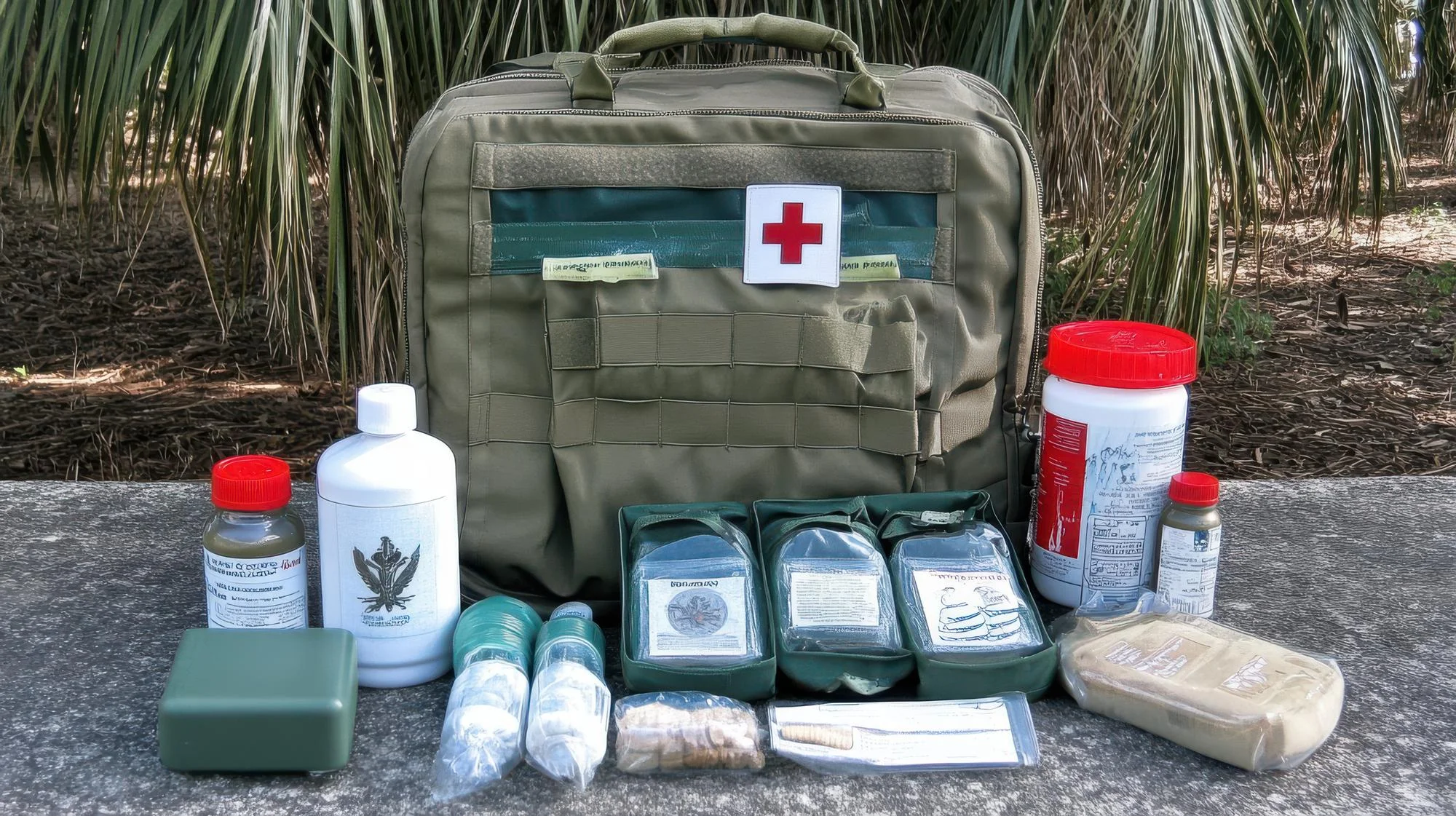
California’s disaster-planning guidance recommends keeping medication and healthcare information together in a waterproof bag. The kit should be simple enough to update and light enough to take during an evacuation.
- Current medication list
- Include medication names, dosages or strengths, directions, and allergies.
- Pharmacy and prescriber contacts
- Save phone numbers for the pharmacy and the clinicians responsible for essential prescriptions.
- Copies of prescriptions and insurance cards
- Keep copies with the kit when available so another pharmacy can understand the current medication record.
- Medical supplies
- Include needed administration or monitoring supplies, batteries, devices, or related equipment.
For compounded prescriptions, keep the pharmacy label with the medication. The label may contain preparation-specific strength, dosage form, directions, storage information, and beyond-use details that a generic medication list does not fully capture.
Use Labeled Containers
Plan for Heat, Power Outages, Water, and Temperature-Sensitive Medications
The California Board advises evacuees to protect medications from water and extreme temperatures. For refrigerated medications, its disaster-planning guide recommends having a cooler with ice packs available.
The exact storage plan still depends on the medication. Do not assume every compounded or refrigerated prescription can touch ice directly, be frozen, or remain usable after an extended temperature excursion. Follow the label and ask the dispensing pharmacy what conditions apply to that preparation.
- Parked vehicles
- Do not leave medications in a hot vehicle or another uncontrolled environment unless the label permits those conditions.
- Power outage
- Know how a refrigerated prescription will be protected if home refrigeration is unavailable.
- Water exposure
- Use a waterproof medication bag and keep labels and containers dry.
- Uncertain exposure
- Contact the dispensing pharmacy before using a medication that may have overheated, frozen, leaked, or been damaged.
If an Emergency Interrupts a Refill, California Has a Limited Safety Valve
California Business and Professions Code section 4064 allows a pharmacist to use professional judgment to refill a prescription for a dangerous drug or device without prescriber authorization when the prescriber is unavailable and failure to refill might interrupt ongoing care or significantly affect the patient’s well-being.
The California State Board of Pharmacy also notes that declared emergencies can trigger additional waivers or emergency procedures when ordinary pharmacy requirements are impossible to meet.
01. Is my prescriber unavailable because of the emergency?
02. Would missing the refill interrupt ongoing care?
03. Does the pharmacy have enough prescription history to evaluate an emergency refill?
04. Is the medication subject to additional state or federal requirements?
05. Can another open pharmacy access or receive the prescription?
06. What should I do if the medication was lost, damaged, or left behind during evacuation?
Emergency Refill Does Not Mean Automatic Refill
Check the Refill Before It Becomes an Evacuation Problem
Fireside Pharmacy can help with refill timing, medication lists, storage questions, compounded prescriptions, transfer, pickup, and delivery planning.
A Wildfire Medication Evacuation Checklist
Review this list before a Red Flag period, evacuation warning, or other wildfire disruption
01. Keep at least one week’s supply of essential prescription medications when refill rules allow, and rotate the supply so it remains current.
02. Maintain one current medication list with names, strengths or dosages, directions, and allergies.
03. Save pharmacy and prescriber contact information with the medication kit.
04. Keep medications, prescription copies, insurance cards, and important supplies in a waterproof grab-and-go bag.
05. Have a storage plan for refrigerated or temperature-sensitive prescriptions during power loss or evacuation.
06. Know how to locate an open pharmacy and call ahead when wildfire conditions have disrupted normal pharmacy access.
Frequently Asked Questions
How much prescription medication should I keep for wildfire preparedness?
The California State Board of Pharmacy recommends at least one week’s supply of prescription medications in a patient-care kit. The supply should be rotated and replenished so it remains current and not expired.
Can I refill a prescription early just because wildfire season is approaching?
Not automatically. Refill timing can depend on the prescription, medication, prescriber, insurer, and pharmacy. Ask the pharmacy what your normal refill window allows.
What should I keep with my medications during an evacuation?
Keep a current medication and allergy list, pharmacy and prescriber contacts, copies of prescriptions when available, insurance information, needed medical supplies, and the labeled medication containers.
What if a refrigerated medication loses power during an evacuation?
Use the storage instructions for the specific medication and contact the dispensing pharmacy if the medication may have been outside its recommended conditions. Do not assume that freezing, direct ice contact, or later refrigeration makes every medication usable.
Can a California pharmacist provide an emergency refill without the prescriber?
In limited circumstances, California law allows a pharmacist to use professional judgment to refill a dangerous drug or device without prescriber authorization when the prescriber is unavailable and interruption could significantly affect ongoing care. It is not guaranteed for every prescription or situation.
Make the Medication Kit Before an Evacuation Order
Use the form above to request a call about emergency refill readiness, medication storage, a compounded prescription, transfer, pickup, or delivery.