
Medication safety at home is partly about the prescription and partly about the environment around it. A child can reach a purse that was placed on the floor. A pet can chew a container that seemed secure on a counter. A liquid medication can be measured incorrectly if its dosing device is separated from the label. Poison Prevention Month is a useful time to check the entire storage system rather than only the medicine cabinet.
Quick Answer
Store compounded prescriptions and other medicines in their original labeled containers whenever possible, with caps fully secured, inside a locked or otherwise secure location that children and pets cannot see or reach. Do not rely on a child-resistant cap by itself; California Poison Control reminds families that child-resistant does not mean child-proof. Put medication away after every use, even if another dose will be needed later. Keep human medications separate from pet medications to reduce mix-ups, and keep dosing syringes, cups, or other administration tools with the correct prescription. CDC reports that approximately 100 young children are brought to emergency departments each day after getting into medicines left within reach. If you think a child or other person may have swallowed or been exposed to a medicine, call Poison Help at 1-800-222-1222 right away, even if you are not completely sure. If the person collapses, has a seizure, has trouble breathing, or cannot be awakened, call 911. If a pet gets into a medication, contact a veterinarian, emergency animal hospital, or animal poison-control service promptly.
Why March Is a Good Time for a Home Storage Check
National Poison Prevention Week is observed during the third full week of March. In 2026, that falls March 15–21. The timing makes March a practical point to review medicine storage before spring travel, school breaks, houseguests, and changing family routines create new opportunities for medication to be left in unfamiliar places.
CDC’s Up and Away campaign emphasizes returning medicines, vitamins, and supplements to a safe location after every use. The California Poison Control System similarly recommends locked storage that is out of sight and reach of children.
- Countertops
- A medicine left out for the next dose can still be reached by a climbing child or curious pet.
- Purses and backpacks
- Visitor bags can contain prescription or OTC medication and should not be left where children can access them.
- Bedside tables
- Daily medications are easy to forget at bedside, especially when children or pets enter the room.
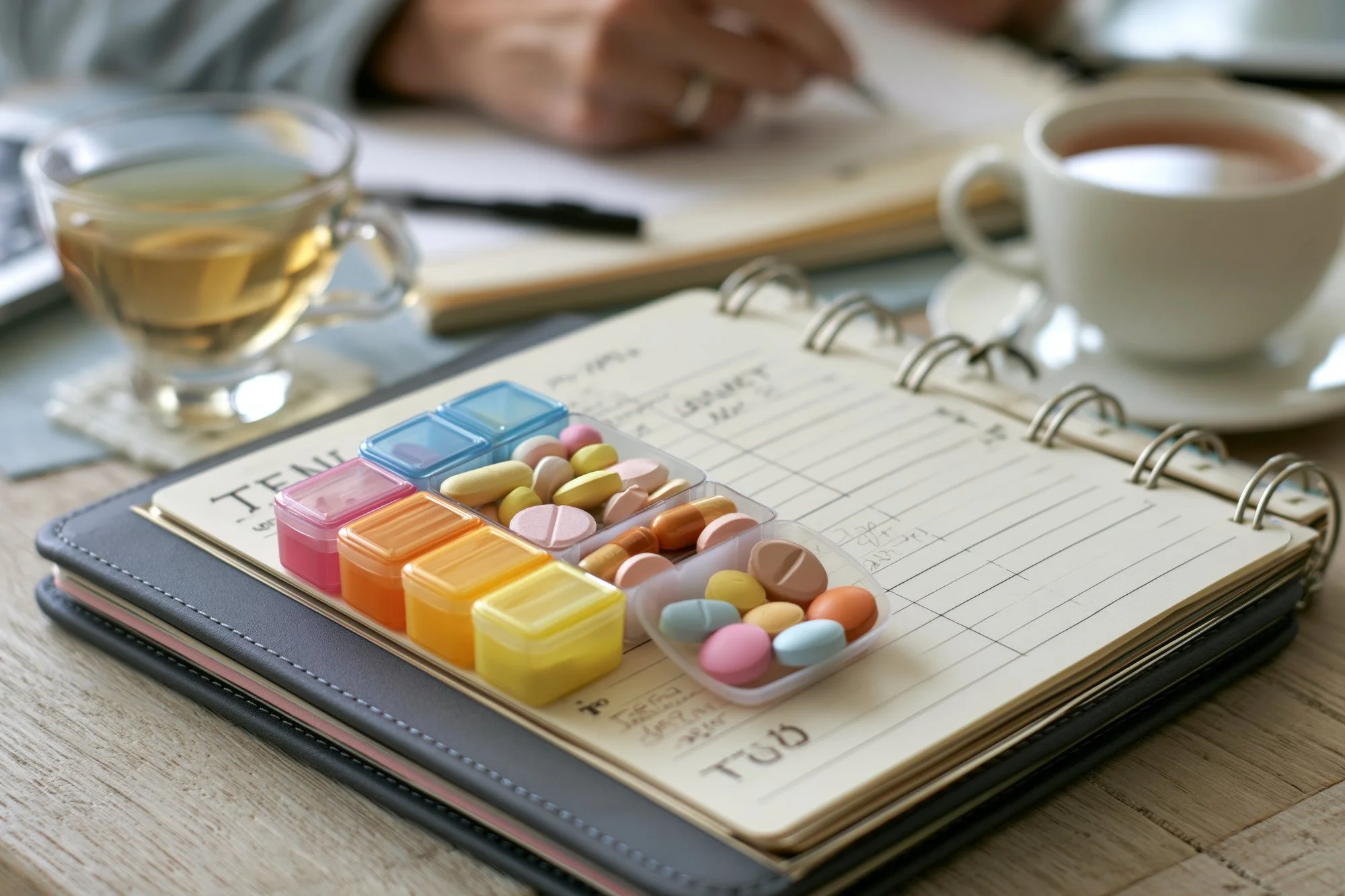
- Pill organizers
- Convenient organizers may not have the same child-resistant features as the original prescription container.
Choose Storage Children and Pets Cannot Reach
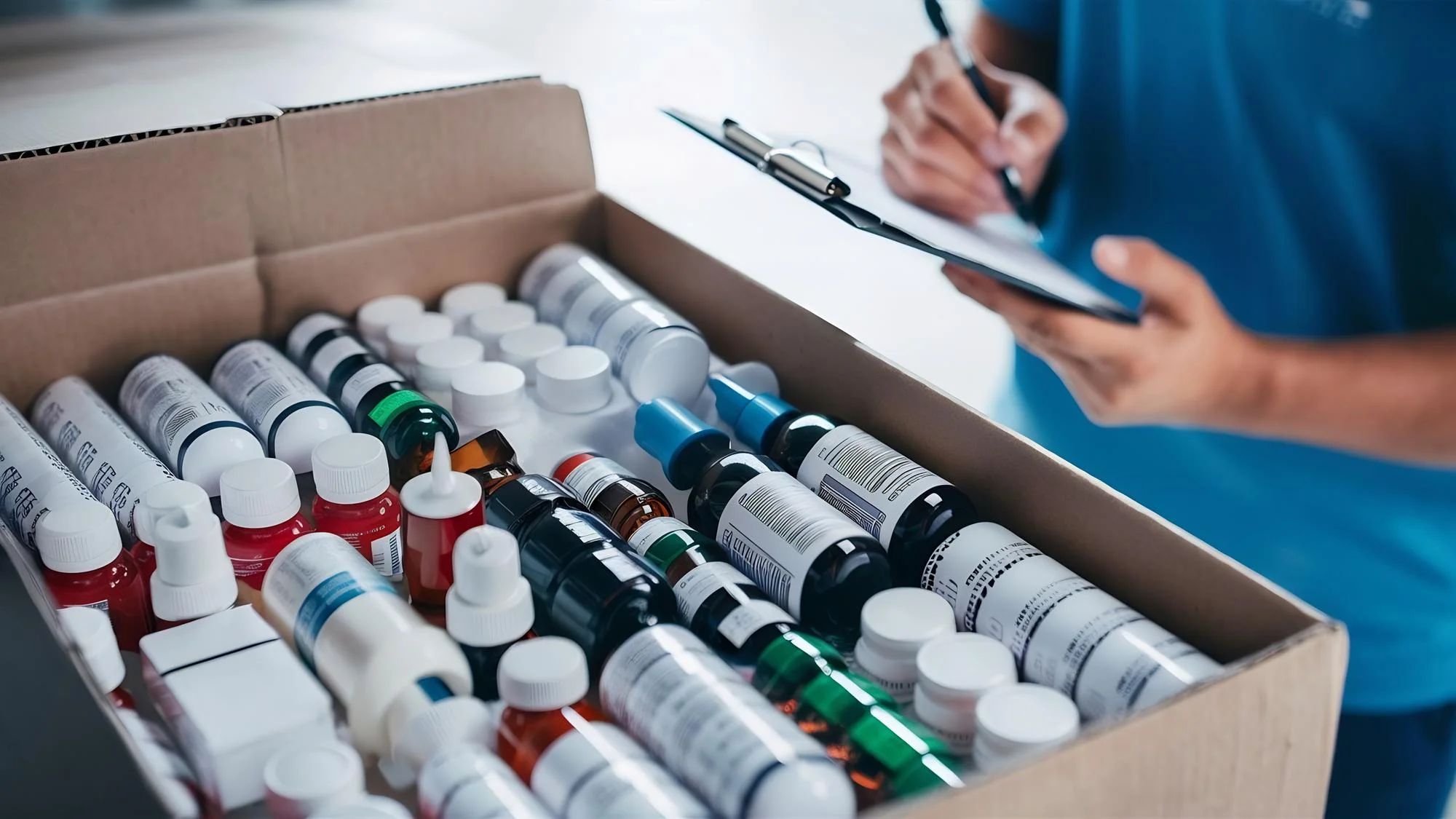
California Poison Control recommends keeping medicine in its original container with the cap secured and returning it to a locked cabinet after use. CDC also advises families to choose a storage location that young children cannot reach or see.
For pets, the same principle applies with an added concern: some animals can jump onto counters, open bags, or chew through medication packaging. A child-resistant closure should not be treated as pet-resistant.
Where is the medication usually kept?
- Can a child see the medication from the floor, a chair, or a nearby counter?
- Can a dog, cat, or other pet jump, climb, chew, or knock the container down?
- Does the container return to secure storage immediately after every dose?
- Does the original pharmacy label stay attached and readable?
- Are dosing tools stored with the correct liquid or compounded prescription?
- Do grandparents, babysitters, visitors, or other caregivers know the household medication-storage rule?
Match the Storage Plan to the Compounded Dosage Form
Compounded prescriptions can be dispensed in different dosage forms and containers. The storage plan should account for the exact preparation without separating it from the pharmacy label or the tools needed to give it correctly.
- Liquids
- Keep the labeled bottle and the correct oral syringe or dosing cup together so household spoons are not substituted.
- Capsules or tablets
- Keep loose doses off counters, floors, bedside tables, and other places where a child or pet can find them.
- Creams and topical preparations
- Secure tubes, jars, pumps, or applicators after use and return them to the labeled storage location.
- Refrigerated preparations
- Follow the current label while also preventing children or pets from accessing the medication inside the refrigerator.
- Injections and supplies
- Store the medication and administration supplies according to the pharmacy’s instructions and keep used sharps in an appropriate sharps container.
- Flavored pet preparations
- Store veterinary medications securely because a pet may seek out a flavored medication and consume more than the prescribed amount.
Prevent Human–Pet Medication Mix-Ups
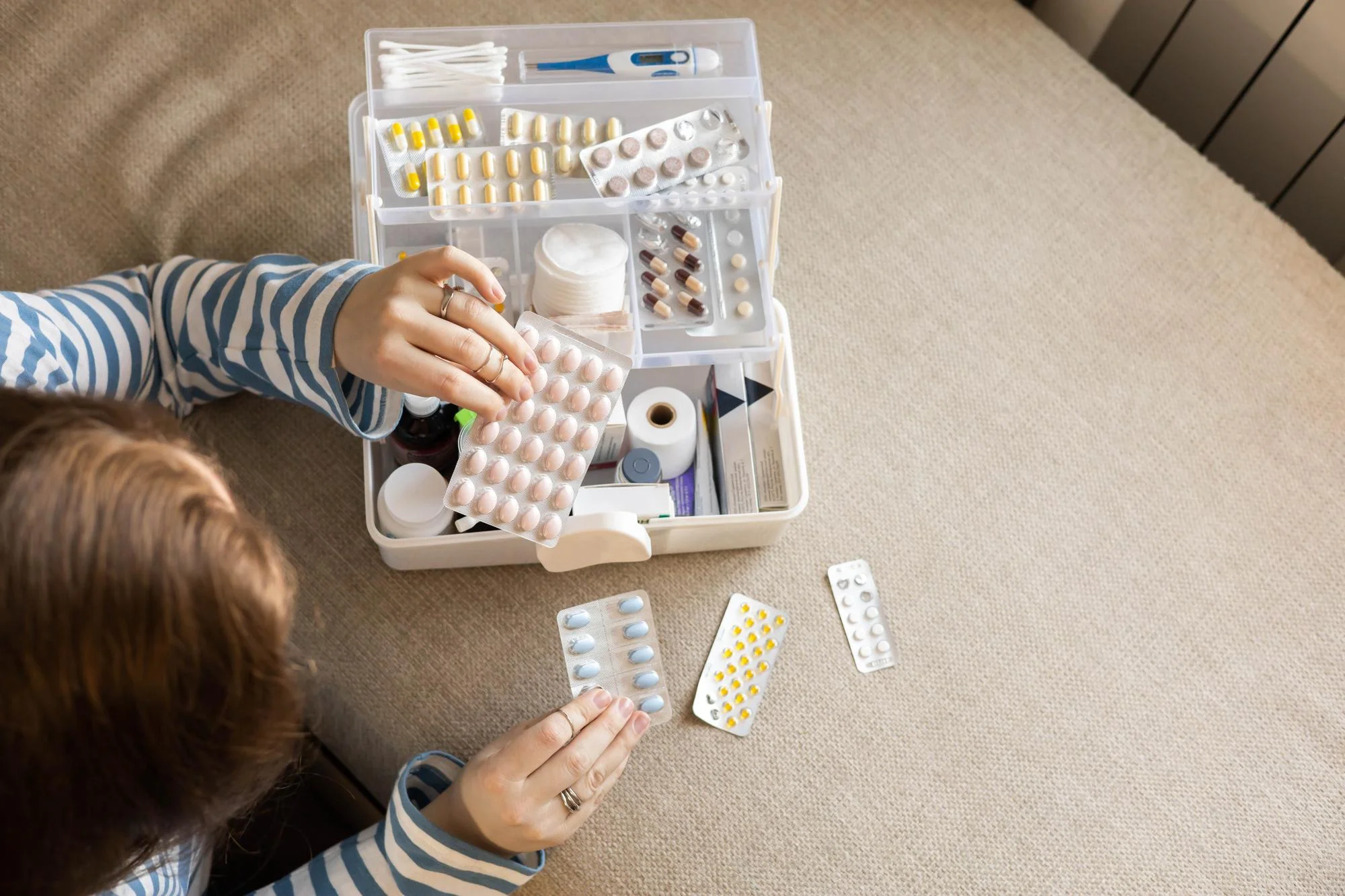
Households with both human and veterinary prescriptions should make the storage areas visibly different. A similar-looking bottle, syringe, liquid, or capsule can be selected by mistake when medications are stored together.
Keep each prescription in its original labeled container and separate medications by person or pet. Do not give a human medication to a pet unless a veterinarian specifically directs it, and do not use one pet’s prescription for another animal unless the veterinarian says to do so.
- Separate storage zones
- Keep human prescriptions and veterinary prescriptions in clearly different locations or bins.
- Read the name every time
- Confirm the patient or pet name and the prescription label before measuring or giving a dose.
- Keep tools matched
- Do not swap oral syringes, droppers, applicators, or other dosing tools between prescriptions.
- Clean dropped medication promptly
- Pick up a dropped pill, capsule, or spilled liquid immediately before a child or pet reaches it.
What to Do After a Possible Medication Exposure
For a human exposure, do not wait for symptoms before asking for poison guidance. Poison Help is available nationwide at 1-800-222-1222, and California Poison Control provides free poison advice 24 hours a day, every day of the year.
Have the medication container or pharmacy label nearby when you call so the poison specialist can identify the product, concentration or strength, and other details. Do not intentionally make someone vomit unless a poison specialist or healthcare professional tells you to do so.
- Possible child or adult exposure
- Call Poison Help at 1-800-222-1222 right away, even when you are not completely sure an ingestion occurred.
- Life-threatening symptoms
- Call 911 if the person collapses, has a seizure, has trouble breathing, or cannot be awakened.
- Pet exposure
- Contact a veterinarian, emergency animal hospital, or animal poison-control service promptly.
- Keep the label
- Bring or read the original medication label so the professional helping you can identify the exact preparation.
Make the Storage Plan Part of the Prescription Plan
Fireside Pharmacy can help review prescription labels, dosing tools, compounded medication containers, household storage, refill timing, pickup, and delivery questions.
Make the Storage Plan Part of the Prescription Plan
Fireside Pharmacy can help review prescription labels, dosing tools, compounded medication containers, household storage, refill timing, pickup, and delivery questions.
Frequently Asked Questions
Are child-resistant prescription caps enough to keep medicine safe?
No. California Poison Control notes that child-resistant caps are not child-proof. Secure the cap and still keep medication in a locked or otherwise secure place that children cannot see or reach.
Should compounded liquid medication stay with its oral syringe?
Yes. Keep the correct dosing device with the labeled prescription so another syringe, cup, or household spoon is not substituted by mistake.
Can I leave a medication on the counter if another dose is due soon?
CDC recommends putting medicines away after every use, even when another dose will be needed later. A short period on a counter can still create access for a child or pet.
What should I do if my child may have swallowed a medication?
Call Poison Help at 1-800-222-1222 right away, even if you are not completely sure. If the child collapses, has a seizure, has trouble breathing, or cannot be awakened, call 911.
What should I do if my pet gets into a human or compounded medication?
Contact your veterinarian, an emergency animal hospital, or an animal poison-control service promptly. Keep the medication label available so the product and strength can be identified.
Make Safe Storage the Last Step of Every Dose
Use the form above to request a call about compounded prescription labels, dosing tools, storage, refill timing, pickup, or delivery.