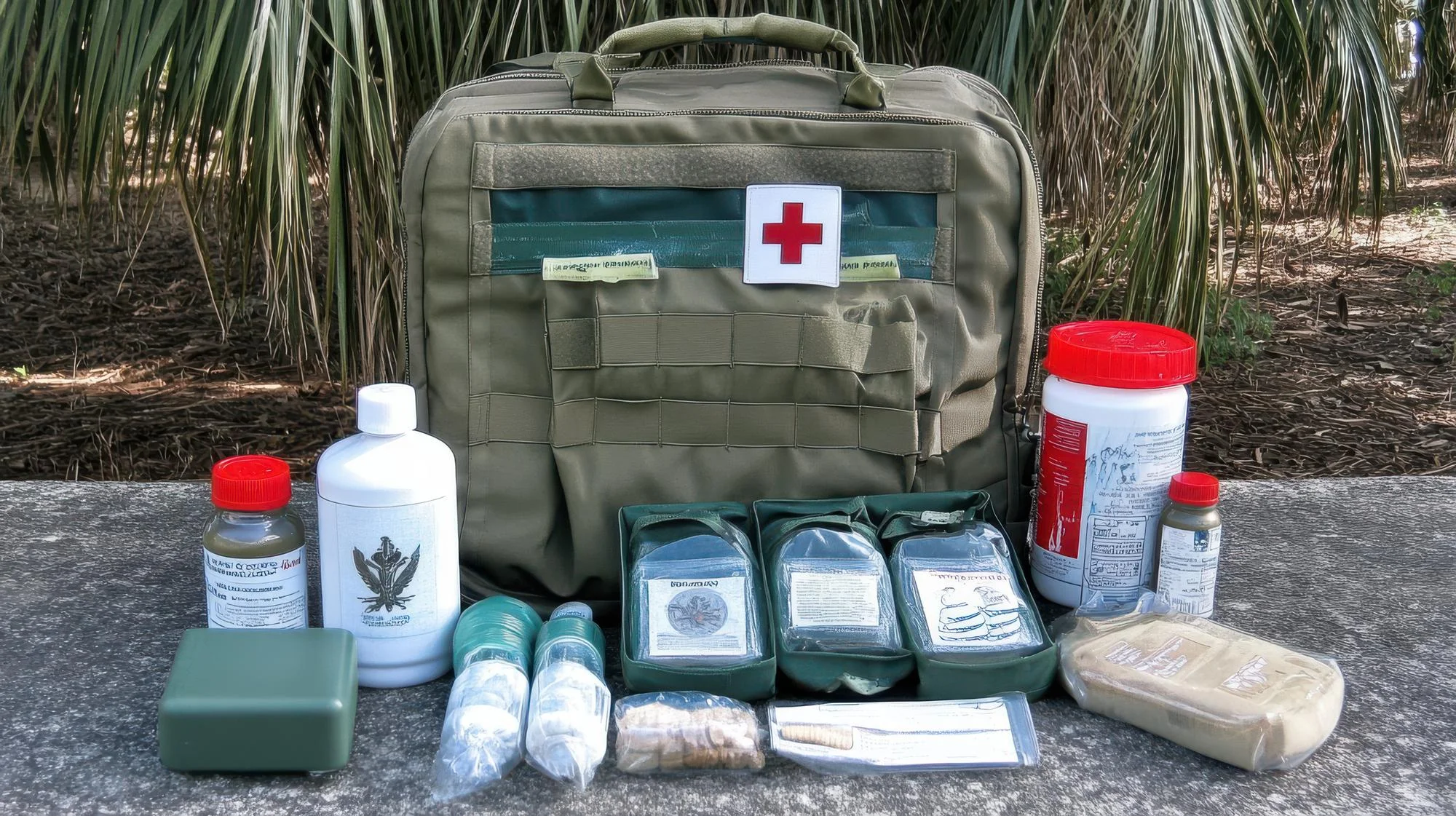


Wildfire smoke can make breathing more difficult, especially for people with asthma or another lung condition. The most useful pharmacy preparation is not a forgotten bag of old medication. It is a current respiratory supply that is regularly checked, replenished, stored correctly, and paired with the devices and contacts needed to use the prescription as directed.
Quick Answer
CDPH advises people with asthma or another lung disease to keep at least a 7-day supply of medication on hand during wildfire smoke conditions, while its Get Smoke Ready guidance recommends a 7- to 10-day medication supply and following existing asthma or COPD action plans. Actual refill timing still depends on the prescription, insurer, prescriber authorization, controlled-medication rules, pharmacy inventory, and pharmacist judgment. Build the emergency respiratory supply around the exact prescribed therapy: current medication, unexpired backup supply when legally available, inhalers or nebulizer medicines, spacers or other prescribed accessories, clean tubing or masks when used, batteries or power for equipment, the medication list, pharmacy contact, prescriber contact, and the current action plan. Check the supply periodically so expired or nearly empty items are replaced through normal refill channels. Use AQI and wildfire-smoke guidance to reduce exposure, not to change medication doses yourself. If smoke worsens breathing symptoms, follow the healthcare provider’s plan and contact medical care as directed; severe breathing difficulty, chest pain, or another emergency symptom requires urgent evaluation rather than a pharmacy-only solution.
What Makes an Emergency Respiratory Supply Usable?
An emergency supply should be ready to use, not simply present in the home. A medication may be current, but the inhaler could be nearly empty. Nebulizer medication may be available, but the machine could lack power, clean tubing, or the correct accessories.
- Current medication
- Keep the prescribed respiratory medications that are part of the patient’s active treatment plan.
- Usable quantity
- Check remaining doses, unit-dose vials, refill status, and the amount actually available rather than relying on the package alone.
- Working delivery device
- Confirm that inhalers, spacers, nebulizers, masks, tubing, pumps, or other prescribed devices are usable.
- Power and charging
- Know what the equipment needs if wildfire conditions interrupt electricity or require temporary relocation.
Check Remaining Doses, Expiration Dates, and Refill Timing
California’s Board of Pharmacy advises patients to periodically use and replenish emergency medications so the supply stays fresh and does not expire. That principle is especially useful for respiratory prescriptions that may be needed quickly during smoke events.
What needs attention in the respiratory supply?
- How many doses or unit-dose containers are actually available right now?
- What expiration or beyond-use dates apply to the medications in the emergency supply?
- When is the next authorized refill, and does the prescription still have refills remaining?
- Does a compounded or specialty respiratory prescription need preparation or special-order lead time?
- Are any inhalers close to empty according to their dose counter or expected use?
- Is the medication stored according to the current pharmacy label during summer heat?
Pair Respiratory Medications With Working Equipment
A respiratory prescription may depend on more than the medication itself. Review the equipment the patient actually uses and keep the required pieces together.
- Metered-dose inhaler
- Check the dose counter when present and keep any prescribed spacer or holding chamber with the inhaler.
- Nebulizer medication
- Keep the prescribed medication, compatible device, tubing, cup, mask or mouthpiece, and cleaning instructions together.
- Power-dependent nebulizer
- Know whether the device requires wall power, batteries, a charged backup, or another approved power source.
- Compounded respiratory preparation
- Keep the current pharmacy label, storage instructions, beyond-use date, formulation information, and dispensing-pharmacy contact available.
Use Smoke and AQI Information for Exposure Precautions
CDPH recommends monitoring wildfire and air-quality information and points Californians to EPA AirNow for local AQI conditions. During smoke events, public-health guidance may include staying indoors, reducing outdoor activity, using cleaner indoor air, or wearing an appropriate respirator when needed.
Those exposure precautions do not replace the patient’s prescribed medication plan. Follow the existing asthma or COPD action plan and healthcare-provider directions unless the clinician changes them.
- Monitor local AQI
- Use official air-quality information to understand smoke conditions and reduce exposure when air quality worsens.
- Reduce smoke exposure
- Follow CDPH guidance for cleaner indoor air, reduced outdoor activity, and other smoke precautions appropriate to the household.
- Follow the action plan
- Use the existing asthma or COPD plan and prescribed medication directions rather than creating a new dose schedule based on AQI alone.
- Call if symptoms worsen
- CDPH advises people with lung disease to contact a healthcare provider when nearby wildfire smoke worsens breathing problems.
Keep the Refill and Pickup Path Open During Smoke Events
Wildfire smoke can disrupt normal routines even when a neighborhood is not under an evacuation order. Roads may close, outdoor travel may be discouraged, delivery windows may shift, or a patient may need to remain indoors.
- Refill before the last doses
- Contact the pharmacy while there is still time to address prescriber renewal, insurance timing, prior authorization, or inventory.
- Pickup plan
- Know who can safely pick up the prescription if the patient is limiting outdoor exposure and pharmacy policy allows an alternate pickup.
- Delivery plan
- Ask about available delivery options and whether temperature-sensitive respiratory prescriptions require special handling.
- Pharmacy closure or route disruption
- Keep the prescription number, medication list, prescriber contact, and pharmacy contact available if normal access changes.
Know When the Problem Needs Medical Care
A pharmacist can help with refill timing, storage, device questions, medication records, delivery, and prescription access. Worsening respiratory symptoms, however, may require medical evaluation.
CDPH advises people with asthma or another lung disease to call a healthcare provider if wildfire smoke worsens breathing issues. CDPH also advises immediate medical care for severe symptoms such as chest pain, chest tightness, or shortness of breath.
- Medication-access question
- Call the pharmacy about refills, labels, storage, delivery, pickup, device supplies, or a delayed prescription.
- Action-plan question
- Use the current clinician-provided plan and contact the healthcare provider if the plan says to do so or symptoms are worsening.
- Severe breathing difficulty
- Seek urgent medical care rather than waiting for a routine pharmacy response.
- Chest pain or another emergency symptom
- Use emergency medical services when symptoms indicate an emergency.
Check the Medication, Device, and Refill Path Before Heavy Smoke
Fireside Pharmacy can help review respiratory prescriptions, compounded medications, inhaler or nebulizer refill timing, storage, pickup, delivery, and device-related pharmacy questions.
A Respiratory Emergency-Supply Checklist for Wildfire Smoke
Use this list periodically during California wildfire season.
- Keep the respiratory medications that are part of the active treatment plan available in the amount permitted by the prescription, insurer, prescriber, and pharmacy.
- Check remaining doses, expiration or beyond-use dates, refill status, storage labels, and whether any compounded or special-order respiratory prescription needs extra lead time.
- Keep prescribed inhalers, spacers, nebulizer devices, masks, tubing, cups, batteries, chargers, or other required accessories with the medication supply.
- Maintain the current medication list, pharmacy contact, prescriber contact, and asthma or COPD action plan where they can be reached quickly.
- Use official AQI and wildfire-smoke guidance to reduce exposure while following the existing prescription directions rather than changing doses on your own.
- If smoke worsens breathing symptoms, follow the healthcare provider’s action plan and seek urgent medical care for severe breathing difficulty, chest pain, or another emergency symptom.
Frequently Asked Questions
How much respiratory medication should I keep ready during wildfire season?
CDPH advises people with asthma or another lung disease to keep at least a 7-day supply on hand, and its Get Smoke Ready guidance recommends a 7- to 10-day medication supply. Actual refill availability still depends on the prescription, insurer, prescriber authorization, inventory, and pharmacist judgment.
Should I save inhaler doses by using the medication less often before smoke arrives?
No. Follow the prescription and healthcare provider’s plan. Do not skip or reduce prescribed doses to create an emergency reserve.
What should I keep with nebulizer medication?
Keep the prescribed medication with the compatible nebulizer, tubing, cup, mask or mouthpiece, cleaning instructions, and any needed batteries, charger, or power plan.
Should I change my respiratory medication when the AQI gets worse?
Do not change the prescription based on AQI alone. Use air-quality information to reduce exposure and follow the existing asthma or COPD action plan unless a healthcare provider changes the medication instructions.
When should wildfire-smoke breathing problems be treated as urgent?
Follow the healthcare provider’s action plan and contact medical care when symptoms worsen. Severe breathing difficulty, chest pain, chest tightness, or another emergency symptom needs urgent medical evaluation.
Keep the Respiratory Supply Current Throughout Smoke Season
Use the form above to request a call about respiratory prescription refills, compounded medications, inhalers, nebulizer supplies, storage, pickup, or delivery.