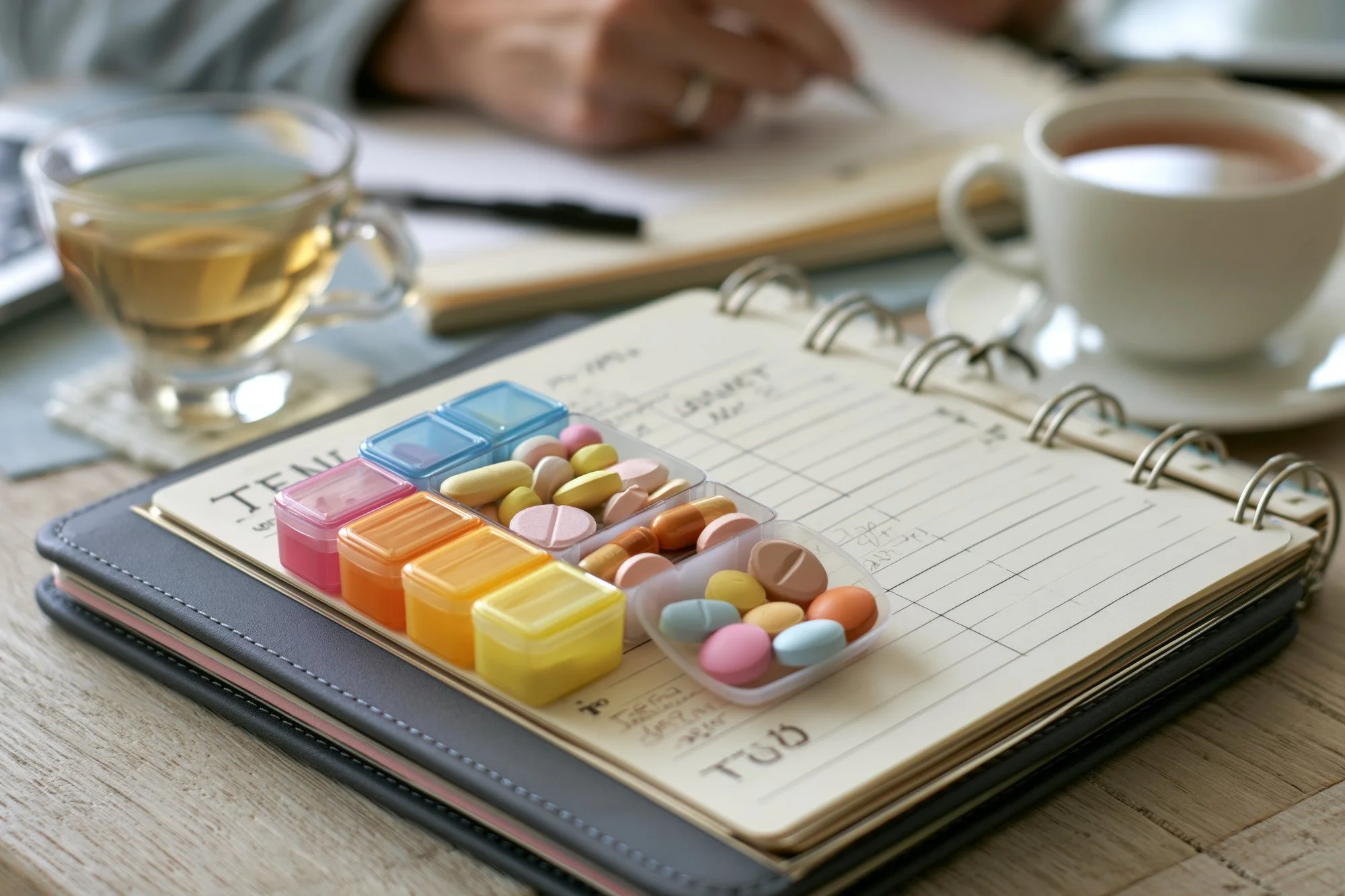


A medication list is most useful when it answers one question quickly: “What is this patient actually using now?” For people managing several prescriptions, specialty medications, compounded preparations, OTC products, supplements, or multiple prescribers, an outdated list can be almost as confusing as having no list at all.
Quick Answer
Start 2026 with one medication record that includes every current prescription, over-the-counter medication, vitamin, herbal product, and dietary supplement you actually use. For each prescription, record the full medication name, strength, dose, route, frequency, prescriber, dispensing pharmacy, and any practical refill information you need to manage it. For compounded medications, also record the preparation name, concentration or strength, dosage form, route, storage instructions, and current beyond-use information from the dispensing label. Keep discontinued medications separate from the active list so old directions are not mistaken for current ones. Add a “last updated” date and revise the record whenever a medication is started, stopped, changed, transferred, or reviewed after a hospital, urgent-care, specialist, or pharmacy visit. The list supports communication, but it does not replace the prescription label or a clinician’s instructions.
Why One Working Medication List Matters
Medication information can be spread across patient portals, pharmacy profiles, specialist records, hospital discharge papers, old bottles, caregiver notes, and memory. Those sources may not update at the same time.
AHRQ medication-reconciliation tools emphasize collecting both prescription and nonprescription products and comparing medication information so omissions, duplications, unclear information, and unintended differences can be identified by qualified healthcare professionals.
- One active list
- Use one record for the medications and products currently being taken or used.
- One caregiver copyCirculating virus
- Give an authorized caregiver the same current version rather than maintaining a separate handwritten version.
- One update date
- Show when the list was last checked so an old copy is easier to recognize.
- Old items separated
- Move discontinued medications off the active list instead of leaving old and new directions together.
A Medication List Is a Record, Not a Prescribing Tool
Do not change a dose, stop a prescription, restart an old medication, or add a product simply to make the list look consistent. Record what the current prescriber and pharmacy instructions actually say.
What to Record for Every Current Medication
A name-only list is better than nothing, but a complex regimen often needs more detail. AHRQ patient medication-list tools include fields for medication name, strength, dose, frequency, route, and other practical information.
What changed since the last update?
New prescription
Add the medication only after you have the current label or written instructions. Record the exact name, strength, dosage form, route, frequency, prescriber, dispensing pharmacy and start date if it is useful for your records.
Dose or directions changed
Replace the outdated dose or directions on the active list. Do not leave two current-looking versions of the same prescription without a clear explanation.
Medication stopped
Remove the medication from the active list. If you keep a history, move it to a clearly marked stopped or inactive section so it is not mistaken for a current prescription.
Pharmacy or insurance changed
Update the dispensing pharmacy, contact information and any specialty-pharmacy or refill-coordination details. The medication itself may be unchanged even though the access information changed.
Hospital or specialist visit
Compare the updated instructions from the visit with the working medication list. If anything conflicts, ask the appropriate clinician or pharmacy which instruction is current before editing the list.
01. What is the full medication name, including any letters or formulation details that appear on the label?
02. What strength or concentration is being dispensed?
03. How much is used for each dose and by which route?
04. How often is the medication used according to the current directions?
05. Which prescriber currently manages the prescription and which pharmacy dispenses it?
06. When was the medication information last confirmed?
Use the Current Label, Not Memory
If the directions on an old bottle, portal, discharge paper, or handwritten list do not match the current prescription label, ask the pharmacy or prescriber which instruction is current.
Compounded and Specialty Prescriptions Need Extra Fields
A complex prescription can be harder to identify from the medication name alone. A compounded preparation may have a patient-specific concentration, dosage form, route, storage requirement, and beyond-use date. A specialty medication may have refill coordination, authorization, or dispensing-pharmacy details that are useful to track.
- Compounded preparation
- Record the preparation name, ingredients when shown, concentration or strength, dosage form and route.
- Storage information
- Copy current storage instructions from the dispensing label rather than from an older fill.
- Beyond-use information
- Record the current beyond-use date when it is important for managing a compounded preparation.
- Specialty coordination
- Note the dispensing pharmacy, refill contact, authorization status if known, and expected next-fill date.
Do Not Copy Old Compounding Details Into a New Fill
Storage instructions, concentration, preparation details, and beyond-use information can differ. Use the label on the preparation that was actually dispensed.
Include OTC Products, Vitamins, Herbals, and Supplements
A complete medication record should not stop with prescription bottles. AHRQ specifically includes OTC medications, vitamins, minerals, herbal products, and supplements in medication-list and medication-review tools.
Record products that are used regularly as well as products taken only when needed if they are relevant to the current routine. Use the exact product name and active ingredients when practical, especially for multi-ingredient cold, pain, sleep, allergy, or combination products.
- OTC medicines
- Include pain, allergy, stomach, sleep, cold, cough and other nonprescription medicines you actually use.
- Herbal products
- Include herbal products and teas used for health purposes when they are part of the routine.
- Vitamins and minerals
- Record the product and amount rather than writing only “vitamins.”
- Dietary supplements
- Include supplements so pharmacists and clinicians can review the full product list when needed.
“Nonprescription” Does Not Mean “Leave It Off the List”
Pharmacists and clinicians need to know about OTC products and supplements when reviewing the full medication regimen.
Update the List When the Regimen Changes, Not Once a Year
January is a useful reset point, but the list should stay current throughout the year. Joint Commission guidance for repeated outpatient care recommends a process for detecting medication changes on later visits and updating medication information as needed.
- New medication
- Add a newly prescribed medication using the current label or written instructions.
- Medication discontinued
- Move it off the active list and record that it was stopped if keeping a history is useful.
- Changed dose or directions
- Replace outdated instructions instead of keeping two active versions of the same prescription.
- Transition of care
- Review the list after hospitalization, urgent care, surgery, a specialist visit, or another encounter where medicines may have changed.
A pharmacy change, insurance change, new specialty-pharmacy requirement, or change in caregiver responsibilities can also make an update worthwhile even when the medication itself stays the same.
How to Share the List Without Creating More Confusion
The goal is to keep the same current information available to the people who genuinely need it. Avoid maintaining several versions that can drift apart.
01. Keep one primary list and mark the date it was last updated.
02. Bring or securely share the current list at new prescriber, specialist, urgent-care, hospital, or pharmacy visits when medication review is relevant.
03. Give an authorized caregiver the same current version if they help manage refills or appointments.
04. Remove outdated printouts from wallets, medication bags, and caregiver folders when a new version replaces them.
05. Keep allergies or prior medication reactions visible on the record when they have been documented.
06. Use the prescription label and clinician instructions as the source for current directions when another record conflicts.
The Pharmacy Profile May Not Show Everything You Use
A pharmacy can review prescriptions filled in its own records, but it may not automatically know about prescriptions filled elsewhere, OTC products, supplements, or a medication recently stopped by another clinician.
Bring the Medication List and the Prescription Questions Together
Fireside Pharmacy can help review prescription names, strengths, dosage forms, refill timing, compounded preparations, specialty medications, transfer, pickup, and delivery details.
Frequently Asked Questions
What should a complete medication list include?
Include current prescriptions, OTC medicines, vitamins, herbal products, and dietary supplements. For prescriptions, useful fields include the medication name, strength, dose, route, frequency, prescriber, pharmacy, and the date the information was last confirmed.
Should discontinued medications stay on my active medication list?
No. Move discontinued medications off the active list so old directions are not confused with current treatment. If you want to keep a history, place stopped medications in a clearly separate section.
What should I record for a compounded prescription?
Record the preparation name, concentration or strength, dosage form, route, current directions, dispensing pharmacy, storage instructions, and current beyond-use information shown on the dispensed preparation.
Do vitamins and supplements belong on a medication list?
Yes. AHRQ medication-management resources include OTC medicines, vitamins, minerals, herbal products, and dietary supplements as part of a complete medication review.
How often should I update my medication list?
Update it whenever something changes, including a new medication, dose or direction change, discontinued medication, new pharmacy, or a healthcare visit that changes the regimen. Add a last-updated date so older copies are easier to spot.
Make One Current Medication List the Starting Point for 2026
Use the form above to request a call about prescription details, compounded or specialty medications, refill timing, transfer, pickup, or delivery.